
Pelvic Balance, Baby Positioning, and Trusting the Process
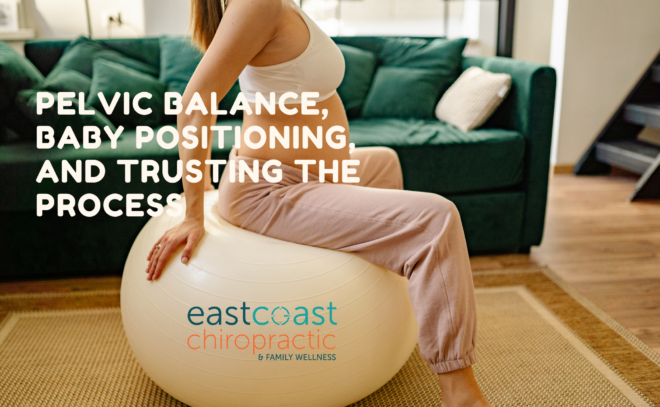
When it comes to pregnancy, there’s often a lot of conversation around “optimal baby positioning.” While this can be helpful, it can also create unnecessary pressure or worry, especially if things don’t seem to be going perfectly.
Let’s take a step back.
Your body is not failing you, and your baby is not “doing it wrong.”
Instead of focusing on perfect positioning, a more supportive and empowering approach is to look at pelvic balance, how your body moves, adapts, and creates space throughout pregnancy.
The pelvis isn’t a fixed structure. It’s dynamic, responsive, and influenced by your posture, movement patterns, muscle tone, and daily habits. When the pelvis and surrounding tissues are able to move well and stay relatively balanced, it creates an environment where your baby can find a position that works best for both of you.
This doesn’t mean you need to micromanage every position or spend hours doing specific exercises.
In fact, simple, consistent habits often have the biggest impact:
- Changing positions regularly throughout the day
- Getting on the floor and moving in different ways
- Walking, rocking, or swaying your hips
- Avoiding long periods of slouched sitting when possible
- Creating space through gentle stretches and breathwork
These types of movements support your nervous system, reduce tension, and encourage adaptability—not just in your body, but for your baby as well.
If You’re Feeling Worried About Baby’s Position
It’s completely normal to want to do something if you’ve been told about positioning or you’re feeling unsure. The goal isn’t to control your baby’s position, but to support your body in a way that gives them options.
Here are some simple, supportive ways to do that:
- Think variety, not perfection
Instead of trying to hold one “ideal” posture, aim to move often. Your body (and your baby) benefit more from variety than from staying in any single position all day. - Create space in the front of your body
Long periods of leaning back or slouching can compress the front of the pelvis. Try sitting more upright or slightly forward (think hips a bit higher than knees), especially later in pregnancy. - Use the floor more
Positions like hands-and-knees, side-lying, or gentle lunges can help reduce tension and encourage more balanced movement in the pelvis. - Breathe into your ribcage and abdomen
Gentle, expansive breathing helps reduce overall tension and supports your diaphragm and pelvic floor working together, both of which influence how your body adapts to your growing baby. - Walk and sway
Simple, rhythmic movement like walking can help keep things mobile and responsive without overthinking it. - Do your own research and get individualized support if needed
If you’re feeling stuck, uncomfortable, or concerned, working with someone trained in pregnancy care, like a chiropractor who uses the Webster technique to help assess your specific patterns and support balance in a way that’s tailored to you. (Find one near you here). Or educate yourself on baby positions, labour and birth by taking a birth prep class (here’s the best one) or using an online resource (my favourite one here).
It’s also important to remember that baby positioning is influenced by many factors, including your/their anatomy and timing. There is a wide range of normal, and many babies shift positions even late in pregnancy or during labor.
Supportive care isn’t about moving a baby into optimal positioning. It’s about creating better conditions for your body to function the way it’s designed to and allow that process to take place naturally if it is safe for your baby to do so.
At the end of the day, this isn’t about achieving perfection.
It’s about supporting balance, encouraging movement, and trusting the process.
Your body is doing something incredibly intelligent, and your baby is an active participant in that process.
You don’t need to control every piece of it. You just need to support it.