Why Every Woman Over 35 Should Know About Creatine
For years, I always viewed creatine as a supplement for bodybuilders and elite athletes. If you walked into a supplement store you were likely to find it marketed almost exclusively toward young males looking to build muscle after weight training. Today, the science tells a very different story. Researchers are now discovering that creatine may be one of the most important supplements for women, particularly during perimenopause, menopause, and the aging process.
Many experts believe women may have even more to gain from creatine supplementation than men.
What Is Creatine?
Creatine is a naturally occurring compound found primarily in muscle tissue and the brain. It helps your body produce ATP (adenosine triphosphate), which is the primary source of energy in your cells.
Every time you:
- Lift something heavy
- Climb stairs
- Stand up from a chair
- Think through a difficult task
- React quickly to prevent a fall
your body relies on ATP. Creatine acts as a rapid energy reserve, helping your muscles and brain perform at their best.
Why Creatine Matters More As We Age
Beginning around age 30, adults naturally begin losing muscle mass (how rude!).
For women, this process accelerates during perimenopause and menopause due to declining estrogen levels.
This can contribute to:
- Reduced strength
- Slower metabolism
- Increased fatigue
- More aches and pains
- Reduced balance
- Higher risk of falls
- Loss of independence later in life
Most importantly, resistance exercise and adequate protein intake can dramatically slow this process. AND research shows creatine can amplify many of these benefits as well.
Women Naturally Have Lower Creatine Stores
One reason researchers are becoming so interested in creatine for women is that women generally start with lower creatine stores than men.
This means supplementation may have a larger relative impact on muscle and brain energy metabolism. Emerging research suggests women may be particularly responsive during periods of hormonal change such as perimenopause and menopause.
Benefit #1: Preserving Muscle Mass
One of the strongest predictors of healthy aging is maintaining muscle mass. This is one of the reasons we always recommend resistance exercise, test grip strength, and measure global health metrics on an annual basis.
Healthy muscle supports:
- Metabolic health
- Blood sugar regulation
- Joint stability
- Bone health
- Mobility
- Longevity
Research consistently shows that creatine combined with resistance training increases lean muscle mass more than exercise alone. The International Society of Sports Nutrition considers creatine monohydrate the most effective nutritional supplement available for increasing lean body mass and improving high-intensity exercise performance.
Benefit #2: Improved Strength
Strength is one of the most important health markers as we age.
Women often notice declining strength beginning in their 40s and 50s (I definitely see this even earlier in my practice with postpartum moms).
Research has shown that creatine supplementation can improve:
- Lower body strength
- Upper body strength
- Functional performance
- Exercise capacity
This means everyday activities become easier while reducing future risk of frailty and loss of independence.
Benefit #3: Better Brain Energy and Cognitive Function
One of the most common complaints during perimenopause is “brain fog.”
Researchers now recognize that the brain has very high energy demands, and creatine plays a critical role in supporting brain energy metabolism.
Studies suggest creatine may support:
- Mental clarity
- Memory
- Attention
- Processing speed
- Resilience to sleep deprivation (**moms!!**)
Researchers are actively investigating whether declining estrogen levels may affect brain creatine metabolism during perimenopause and menopause. Early findings are promising but more research is still needed.
Benefit #4: Recovery and Exercise Tolerance
Many women notice that workouts become more difficult to recover from as they age.
Research suggests creatine may help:
- Improve recovery between workouts
- Reduce training fatigue
- Support rehabilitation
- Improve tolerance to higher training volumes
This may help women stay consistent with exercise, which is ultimately one of the most powerful tools for healthy aging.
Benefit #5: Supporting Healthy Aging
Researchers are studying creatine’s role in:
- Sarcopenia (age-related muscle loss)
- Functional independence
- Mobility
- Cognitive health
- Fall prevention
While creatine is not a magic pill, it appears to be one of the few supplements with meaningful evidence supporting its role in preserving physical function throughout life.
Does Creatine Make Women Bulky?
This is one of the most common concerns.
The answer is no.
Creatine does not contain hormones and does not increase testosterone.
Instead, it helps muscles produce energy more efficiently.
Most women notice:
- Improved strength
- Better workout performance
- Improved recovery
- Improved muscle tone
without significant increases in muscle size.
Is Creatine Safe?
Creatine is one of the most studied supplements in the world.
The International Society of Sports Nutrition has concluded that both short-term and long-term creatine supplementation is safe in healthy individuals and may even provide therapeutic benefits across the lifespan. Studies have reported safe use of doses up to 30 grams daily for five years.
Current research does not support common myths that creatine:
- Damages healthy kidneys
- Causes dehydration
- Causes muscle cramps
Individuals with kidney disease should consult their healthcare provider before supplementation.
How Much Should Women Take?
The evidence-based recommendation is simple:
3–5 grams of creatine monohydrate daily
No special “women’s creatine” product is required.
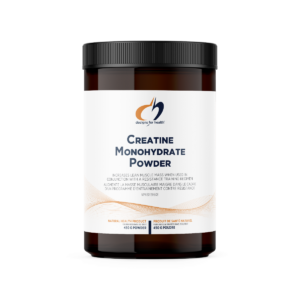
In fact, experts generally recommend standard creatine monohydrate because it is the most researched, most effective, and most affordable form available. One of our favourite supplement brands is Designs for Health and we now carry their Creatine Monohydrate powder at our office. This is the product we use ourselves at home.
The Bottom Line
Creatine can help women maintain strength, muscle, energy, and independence as they age.
Combined with resistance training, adequate protein intake, quality sleep, and great chiropractic care, creatine may be one of the most effective tools available for supporting healthy aging.
It may be one of the simplest investments you can make for your future health.